Mergers, acquisitions, divestitures, and corporate restructurings frequently force organizations into cross-tenant Microsoft 365 migrations. Over the past few years, Microsoft has greatly improved its native tenant-to-tenant (T2T) tools for Exchange Online, OneDrive, and SharePoint Online.
While these utilities streamline data movement, many infrastructure teams still underestimate the risks involved. Moving files is the easy part; preserving identity frameworks, complex security policies, data governance configurations, and internal automation is where projects run into trouble.
For enterprise architects and IT leaders, anticipating these often-invisible dependencies is critical to preventing post-cutover business disruption.
1. Identity Infrastructure and Auth Drift
Data movement often takes priority while identity architecture becomes an afterthought. User accounts, multi-factor authentication (MFA) methods, group memberships, and conditional access policies span deep across corporate environments.
Recreating these controls accurately in a target tenant requires meticulous planning. Common post-migration pitfalls include:
- MFA Friction: Forcing instant re-registration for thousands of migrated users simultaneously, overwhelming helpdesks.
- Conditional Access Gaps: Missing unique security exclusions or named network locations, causing legitimate access attempts to block.
- Broken Service Principals: Enterprise applications losing connection to core directories due to changed object IDs.
2. Hardcoded Links and Automation Failures
Modern M365 environments are rarely static file repositories; they run on integrated workflows. Cross-tenant migrations alter backend tenant URLs and unique resource IDs, which can instantly break custom business logic.
The Power Platform Impact: Custom Power Automate flows, Power Apps, and Azure Logic Apps frequently reference explicit target site paths or specific source tenant connections.
Furthermore, historical sharing URLs embedded within ongoing emails, Teams chats, or internal documentation will point back to an inactive source directory, cutting off users from active collaboration.
3. Disconnected Teams & Collaboration Ecosystems
Migrating Microsoft Teams involves much more than moving channel chat logs and document tabs. Modern Teams deployments are tightly integrated with the broader Microsoft 365 ecosystem:
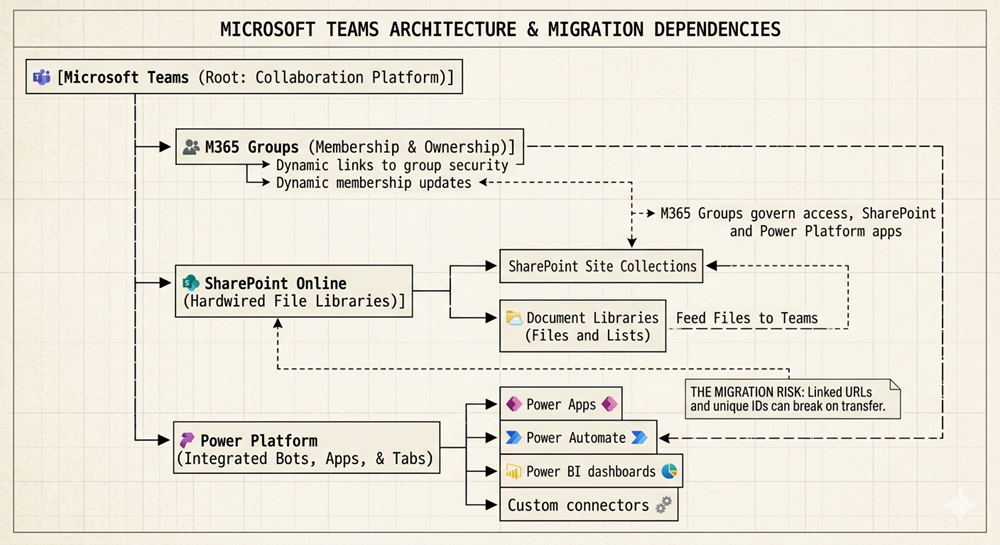
If you copy channel files without mapping underlying group memberships, access rights do not translate cleanly. Custom apps, pinned dashboards, conversational bots, and meeting recording permissions must be discovered and reconfigured systematically before the cutover weekend.
4. Compliance and Data Governance Gaps
Data compliance settings do not travel automatically with raw files. If your source tenant operates under strict regulatory requirements, you must rebuild your entire governance posture within the target environment before migrating content.
Failing to map these configurations creates massive compliance exposure:
- Microsoft Purview Retention: Data subject to active retention schedules or legal holds can inadvertently become open to deletion.
- Sensitivity Labels: Unmapped encryption or data loss prevention (DLP) rules may drop off, exposing sensitive corporate IP.
- Audit Logs: Historical operational trails remain in the source tenant and must be exported manually for forensic continuity.
Strategic Checklist for Risk Mitigation
A successful T2T migration treats consolidation as a business transformation rather than a basic file copy. Enterprise projects should align with a structured mitigation path:
| Migration Phase | Core Focus Area | Key Technical Deliverable |
| 1. Discovery | Identity & App Mapping | Enterprise application and service principal dependency audit. |
| 2. Architecture | Security Alignment | Re-authoring Conditional Access and Purview compliance policies. |
| 3. Validation | Technical Piloting | Executing isolated multi-department test runs to check link persistence. |
| 4. Cutover | Go-Live Execution | Transitioning MX records, final delta syncs, and delta permissions check. |
| 5. Operations | Post-Migration Support | Automated verification of app registrations and targeted user support. |
How Olive + Goose Can Help
Navigating a cross-tenant migration requires deep technical capabilities across identity architecture, cloud security, and platform governance. The biggest project risks lie outside the migration utilities themselves.
At Olive + Goose, we specialize in managing complex enterprise transitions. From early readiness planning and identity alignment within Microsoft Entra ID to deep security validation and automation remediation, we ensure your infrastructure consolidates seamlessly without impacting business continuity.
References